Skip to content

The Avoidant Planner

The struggle isn't because you’re irresponsible.

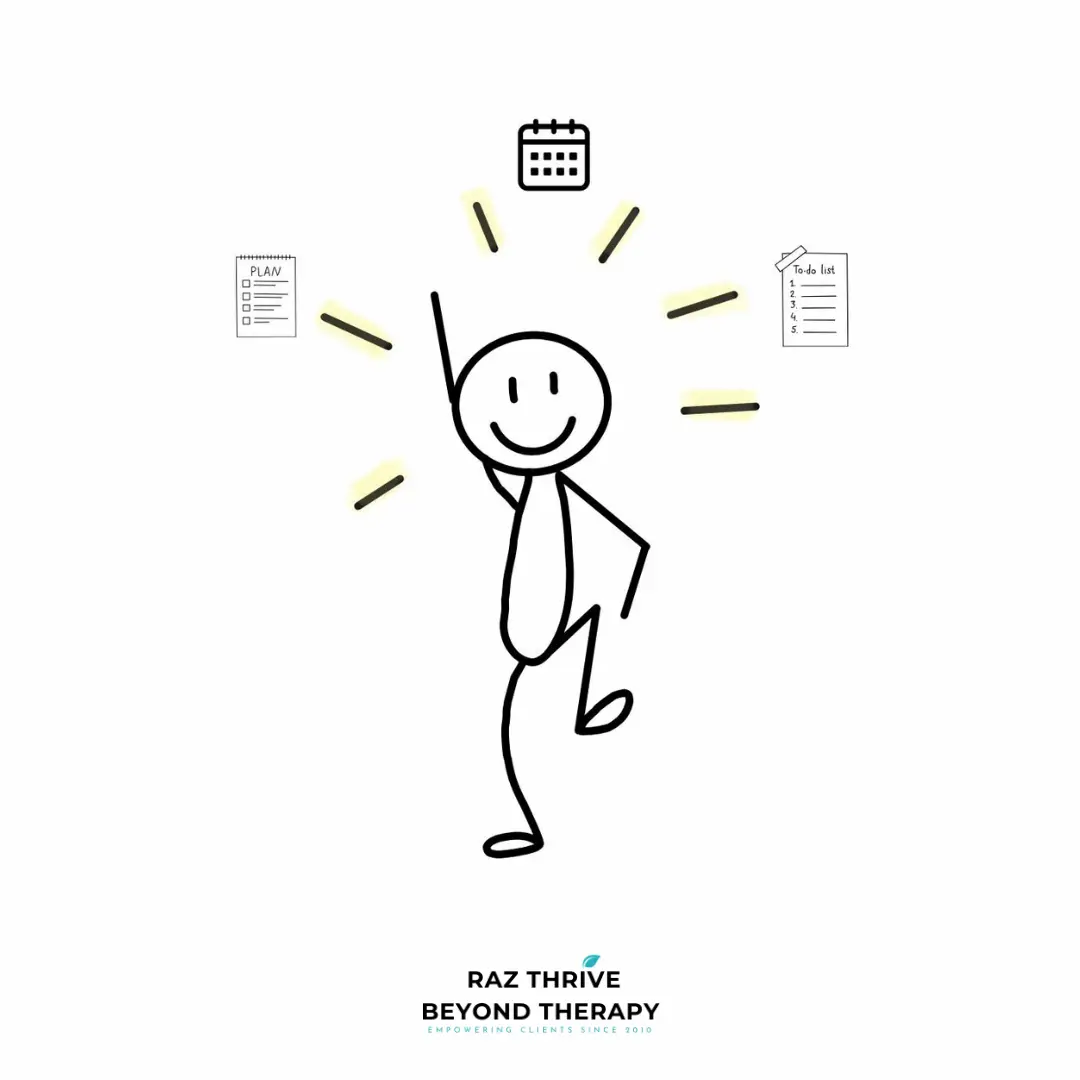
You struggle because planning feels safer than starting - it gives your brain a sense of control when the task itself feels overwhelming. Mapping things out feels protective, while taking action feels emotionally risky.

You’re Not the Problem

You may have internalized the idea that you’re a procrastinator or that you “care about the wrong things,” but the truth is that this pattern is your brain trying to protect you. Avoidance isn’t laziness - it’s a response to emotional pressure.

Your Strength

When you do take action, you’re incredibly strategic - you bring direction, structure, and thoughtful intention that makes everything smoother for everyone involved. You see the bigger picture, anticipate obstacles, and create clarity where others create chaos.

Why Typical Advice Isn't Helping

Avoidant Planners get more stuck when they rely on detailed plans, color‑coded systems, or perfectly mapped‑out steps - those tools increase the emotional pressure to “do it right,” which makes starting feel even riskier and reinforces the cycle.

✦If you want strategies that help you start without triggering a rabbit‑hole or shutdown, you can request your Avoidant Planner Guide here.✦

No cost or commitment - just strategies that actually help


Avoidant planning often starts in a moment that feels productive -

you sit down to map things out so starting will feel easier.


You make a plan, then adjust it, then refine it again.


Each tweak feels like progress, but the more you think through the steps, the heavier the first one becomes.


Your brain starts scanning for what could go wrong, what you might forget, what you should prepare for “just in case.”


Getting your plan solid from every angle feels safe, it feels like it helps the anxiety - but it’s creating the trap.


The longer you plan, the harder it becomes to move.
And the harder it is to move, the more planning feels like the only thing you can do.


What looks like procrastination is really your nervous system trying to protect you from the anxiety of beginning before you feel fully ready.


When you understand why your brain reaches for planning, you can create gentle starting points that feel safe enough to act without triggering anxiety.
What your answers actually mean:

Based on what you selected, although it probably often feels like it, it really isn’t a motivation problem. You’re struggling with activation - that moment where your brain is supposed to shift from intention into action.

It’s an executive function pattern, and it has a predictable cycle:

You start strong…then lose momentum
You get pulled into distractions without realizing it
You restart tasks over and over
You wait for urgency to kick in
You lose time without meaning to
Some days you’re on fire - other days everything feels impossible
The emotional burnout builds

What makes it all feel so hard to escape -

These patterns don’t stay small.


The more they repeat, the more your brain wires itself to expect them - which makes the cycle stronger, faster, and harder to break.

The key: understand the pattern, then you can interrupt it instead of getting swept back into it.

If you want help understanding the way your pattern responds, you can get personalized strategies based on your result.

Over time, this pattern starts to cost you

Even when you’re trying your best, this pattern quietly chips away at the parts of your life that matter most - and hides strengths you don’t even realize or remember you have.

You may already be experiencing it with:

Missed deadlines (even though you care)
Constant stress & mental clutter
Feeling behind no matter how hard you try
Frustration from starting over again and again
Losing confidence in your ability to follow through and in yourself

You are so much more than your struggles

Even when things feel chaotic or inconsistent, your brain has strengths that get buried under stress, burnout, or years of feeling “behind.” These strengths are real - and they’re often the exact abilities that help you thrive once the friction is reduced.

The part we all forget when we're struggling:

Your strengths haven’t disappeared.

When your brain is stuck in overwhelm, avoidance, shutdown, or burnout, these strengths get misdirected into survival mode instead of forward movement.

You may recognize pieces of yourself in strengths like:

Deep focus bursts

when something clicks, you can make more progress in an hour than most people make in a day

Creative problem‑solving

your brain makes connections others don’t see, especially under pressure.

Emotional insight

you notice nuance, tone, and unspoken needs; you care deeply.

Adaptability

you can pivot fast and find new paths when things change suddenly.

Resilience

you’ve been pushing through challenges most people never see.

Strategic thinking

even if starting is hard, your brain naturally sees structure and patterns.

These aren’t small strengths - they’re powerful.

They’ve just been buried under a pattern that keeps pulling your energy in the wrong direction.

Once the friction is reduced, these strengths become the foundation for real momentum.

Why the usual advice hasn’t worked for you

On the surface, your pattern - like the others - can look like procrastination.


But underneath, each one has a completely different activation need, emotional load, and brain‑based starting point.

That’s why generic “procrastination hacks” don’t stick.

They’re treating the surface behavior, not the root pattern driving it.


You’re not failing at the strategies.

The strategies were never designed for your brain.

Most productivity advice assumes:

✪ linear focus
✪ consistent energy
✪ predictable motivation
✪ stable emotional load
✪ a nervous system that activates on command

Your brain doesn’t work that way - and that’s not a flaw. (Even if you feel that way some days, it isn't.)

It just means you need tools built for the way your brain actually starts, sustains, and finishes tasks.

What actually helps

Real change happens when you understand the underlying pattern beneath the struggle.

Once you know what your brain is really trying to do - protect you, regulate you, activate you, or keep you safe - then you can build strategies that work from the inside out, not the outside in.

This is where we work together.

We help you:

Identify the root cause beneath the outer behavior
Stop guessing what you need and what works so you feel safe starting
Build a personalized portfolio of strategies that match your activation pattern
Create routines that finally feel doable - not forced

The shift happens from understanding how your brain actually works.

If you want help building strategies that match your brain, you can explore your next steps.

You’re not actually procrastinating

You’ve been trying to use tools built for someone else.

And once you have the right ones, everything changes

The good news?
Activation can be learned.

Your brain isn’t stuck this way. (Even if you've lost hope)

With the right tools, your brain can:

  • start tasks without overthinking
  • stay regulated
  • break the spiral cycle
  • consistency without burnout
  • stay on track without resets
  • feel in control again
This is exactly what coaching is designed for.

The part most important thing to take away:

This isn’t "just you" or a personality trait.
It’s a skill - and skills can be built.

This is exactly what coaching is designed for: helping your brain shift out of survival mode and into sustainable action.

Want help breaking this cycle for good?

You don’t have to keep restarting, pushing through, or trying to “figure it out” on your own.

If you’re ready to work with your brain instead of fighting it, we can walk you through exactly how to:

❂ work with your brain - not struggling against it
❂ build systems that actually stick - because they are built for you
❂ put you back in control - and not always feel like you're trying to recover

No pressure, no commitment - just understanding and support.

Trusted By Families, Schools, and Leading Neurodiversity Organizations Nationwide

Serving clients and providers since 2010.